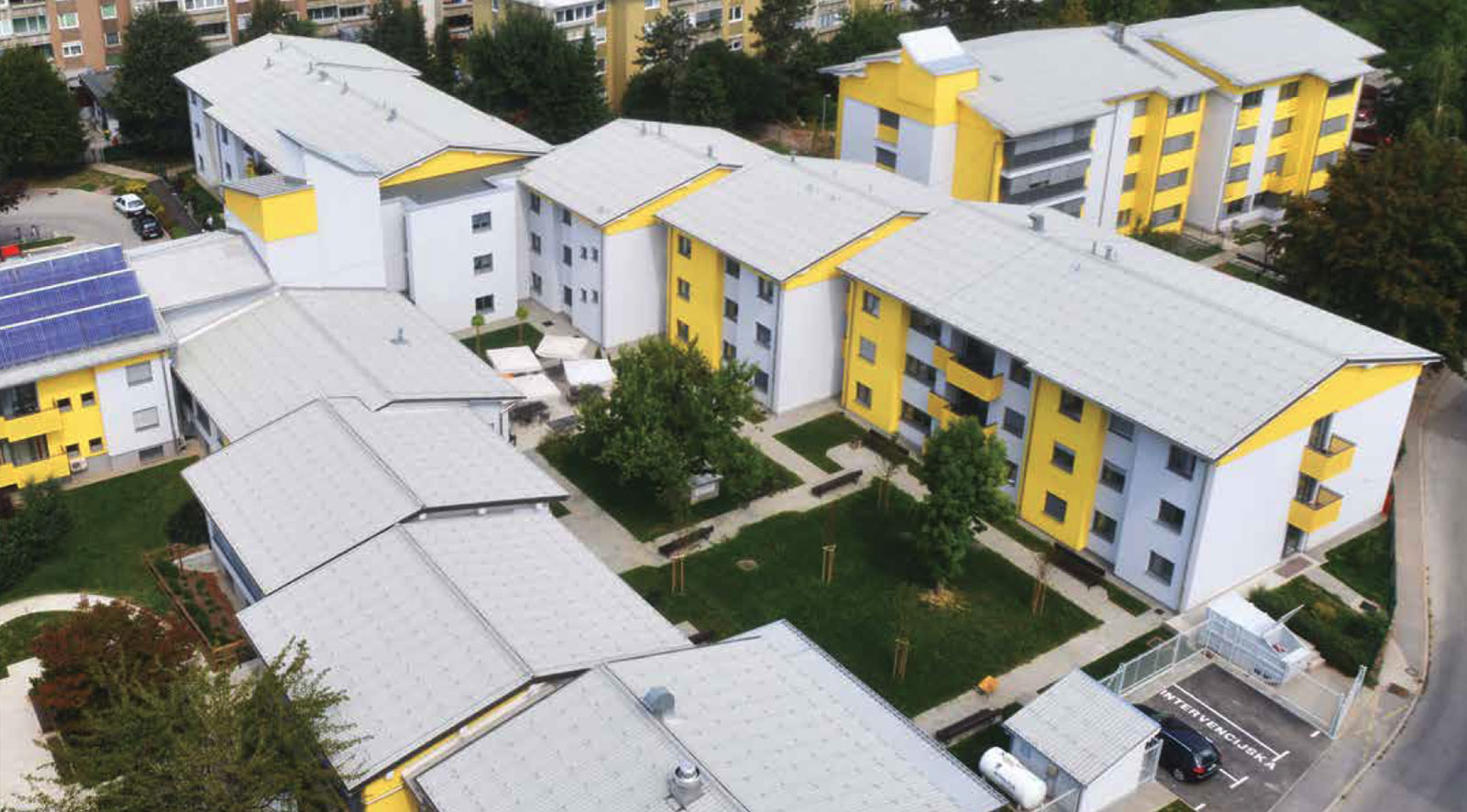

Energy management in nursing homes within the framework of the SSZS (Community of Slovenian nursing homes)
In the most energy-intensive public buildings, such as nursing homes, energy and water represent a large operating expense. The potential for cost reduction is high, but often it is not achieved due to campaigning or unprofessional implementation.
CHALLENGE:
In the most energy-intensive public buildings, such as nursing homes, energy and water represent a large operating expense. The potential for cost reduction is high, but often it is not achieved due to campaigning or unprofessional implementation.
Homes, like other public buildings, have great potential for efficient energy use and optimization of energy supply, as they are organized at the Community level, which, in addition to overall energy management for all members, also enables appropriate connectivity and participation in the electricity and fossil fuel market. In the field of URE, it is possible to save at least 20% of energy and water with appropriate organization and awareness of consumers within an individual home and the transfer of knowledge and best practices between homes and, to a large extent, also from industry.

The main objectives of the project were the following::
- Establish a system of characteristic indicators and a database in the field of sustainable use of natural resources for typical nursing homes.
- To increase awareness of the importance of sustainable use of natural resources, encourage activity to improve the efficient use of energy and water, thereby reducing energy costs and improving the financial situation of homes.
- Increase criticality towards suppliers and take advantage of connecting nursing homes for joint actions and comparisons.
SOLUTION:
The basic condition for improving energy efficiency is the introduction of systematic energy management, which is carried out by integrating two areas, namely:
- establishing an umbrella energy management system and
- the use of appropriate information support. This provides relevant data on what is happening with consumption at any time, compares the efficiency of buildings of the same type based on key energy indicators, and at the same time represents a user-friendly tool for use by different user profiles.
The comprehensive energy management system, which stems from many years of good practice and a much more complex industrial application in the background of the system, has been purposefully and targetedly simplified for use from 2011 onwards. Currently, 40 facilities are included in the system.
The system is technically/substantially built on the basis of numerous applications already implemented and working in practice, with the aim of:
- offers concrete bases for making decisions about investments in the field of energy management,
- increases motivation to implement organizational measures,
- enables the transfer of good practice examples and warning/learning in cases of bad practice, and
- it enables analyses and comparisons both vertically across homes and horizontally at the Community level.
This enables continuous improvement of energy efficiency by promoting and evaluating organizational and investment measures. This is done on the basis of performance indicators based on measured values of energy and water consumption, external conditions, number of residents, billing values, financial parameters and architectural and energy characteristics of the building. Over the years, the system has been upgraded in the direction of monitoring and regulation of peak consumption, digitalization of laundries, monitoring of the amount of washed laundry and food waste, central management of energy devices through control and regulation systems and active energy management.
Results at the level of the SSZS until 2015
THE EFFECTS AT THE HOME LEVEL ARE AS FOLLOWS:
In the most energy-intensive public buildings, such as nursing homes, energy and water represent a large operating expense. The potential for cost reduction is high, but often it is not achieved due to campaigning or unprofessional implementation.
Homes, like other public buildings, have great potential for efficient energy use and optimization of energy supply, as they are organized at the Community level, which, in addition to overall energy management for all members, also enables appropriate connectivity and participation in the electricity and fossil fuel market. In the field of URE, it is possible to save at least 20% of energy and water with appropriate organization and awareness of consumers within an individual home and the transfer of knowledge and best practices between homes and, to a large extent, also from industry.
EFFECTS AT THE LEVEL OF THE SSZS AND BEYOND::
- Through its active role, the Community presents itself as an active, modern organization focused on the concrete benefits of its users as well as the wider environment.
- Long-term contribution to increasing the funds that homes can allocate to the necessary services they need to improve their health and social situation, and thus also improve their quality of life.
- Monitoring of energy parameters is also continuously included in the construction of the information system and analytics that the Community is preparing as a support for business decision-making, thus providing management with a quality basis for making decisions on investment and other measures in this area.
“Our success in energy management is closely linked to ENEKOM, as their employees know what they are doing. They are professional, responsive, pragmatic and focused on the well-being of the customer and finding the best solutions for efficient energy use.
With willingness, hard work and motivation on our part, as well as the professionalism and experience of our contractors, we have written a success story for DSO Ljubljana Vič-Rudnik in the field of efficient energy use.”
Melita Zorec, MSc, Director of the Vič Rudnik Social Welfare Institution and President of the Board of Directors of the SSZS
“The introduction of targeted energy monitoring (ENIS) in the past has enabled the management of the institution to adopt measures that have significantly reduced energy consumption costs and enabled the planning and implementation of selective measures that have made it possible to stop bad practices and introduce actions that have not only reduced energy costs, but also performed work and tasks more efficiently. This has developed an important comparative advantage, as energy consumption and related costs have become manageable.”
Srečko Trojer, Head of Financial Accounting Department of the Podbrdo Retirement Home
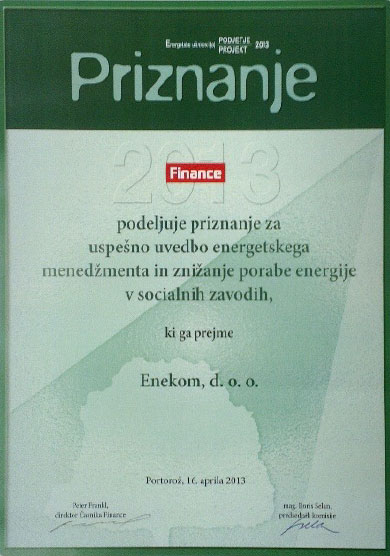
We received an award for energy-efficient project from Finance magazine in 2014 for this project.
